Saturday, September 3, 2011
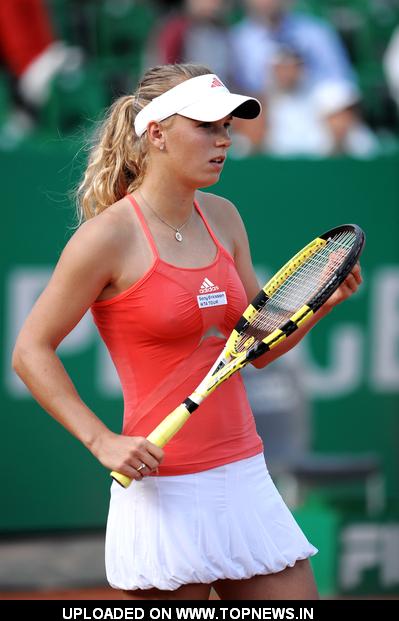
caroline wozniacki tennis players pics
Caroline Wozniacki (born 11 July 1990) is a Danish professional tennis player. On 11 October 2010 she became the World No. 1 on the WTA Tour. After a single week as No. 2 in February 2011, she ensured enough points to become No. 1 again. She is the first Danish tennis player to hold the top ranking position and 20th overall.
Since her WTA debut in 2005, she has improved her year-end ranking each year until finishing on top in 2010. She has won 13 WTA singles titles as of February 2011, three in 2008, three in 2009, six in 2010 (the most since Justine Henin in 2007), and one in 2011. She was runner-up at the 2009 US Open and the 2010 WTA Tour Championships in Doha to Kim Clijsters. She won the 2006 Wimbledon Girls' Singles, but has yet to win a Women's Grand Slam title. She also holds two WTA titles in doubles.* 1 Career
o 1.1 2005
o 1.2 2006
o 1.3 2007
o 1.4 2008
o 1.5 2009
o 1.6 2010
o 1.7 2011
* 2 Personal life
* 3 Career statistics
o 3.1 Grand Slam finals
+ 3.1.1 Singles: 1 (0–1)
* 4 Singles performance timeline
* 5 Awards
* 6 References
* 7 External links
Wozniacki won several junior tournaments in 2005, including the Orange Bowl tennis championship.[6] She made her debut on the WTA Tour at Cincinnati's Western & Southern Financial Group Women's Open on 19 July 2005, losing to the top-seeded and eventual champion Patty Schnyder in the first round. In the Nordea Nordic Light Open, her other WTA tournament of the year, she lost to Martina Suchá in the first round.
In 2006, she was the top seed at the Australian Open (junior girls' singles), but lost the final to eighth-seeded Anastasia Pavlyuchenkova of Russia. She was seeded second with partner Anna Tatishvili in the doubles tournament, but the pair was knocked out in the semifinals by the French-Italian pair of Alizé Cornet and Corinna Dentoni, who were seeded eighth.In February at the Memphis, she reached her first WTA Tour quarterfinal, beating Kristina Brandi and Ashley Harkleroad before losing to third-seeded Sofia Arvidsson of Sweden.
Caroline Wozniacki
Caroline Wozniacki
Caroline Wozniacki
Caroline Wozniacki
Caroline Wozniacki
Caroline Wozniacki
Caroline Wozniacki
Caroline Wozniacki
Caroline WozniackiCaroline Wozniacki
Saturday, August 27, 2011
Kobe Bryant's cute Wife 2011 images
The basketball world was absolutely floored Sunday when the L.A. Lakers' hopes of a three-peat came to a screeching halt.
The Lakers were swept by the Dallas Mavericks in a series capped by an embarrassing 36-point drubbing in Game 4.
Fans and analysts are pointing to several reasons for the Lakers' demise: age, poor perimeter defense, lack of focus.
But the prevailing theory is that Pau Gasol was distracted by the fact that his girlfriend broke up with him right before the playoffs started. To make matters worse, Gasol's girlfriend was apparently counseled and told to break up with him by none other than Mrs. Kobe Bryant.
Let's take a closer look at the woman who single-handedly took down the Lakers dynasty.
The Lakers were swept by the Dallas Mavericks in a series capped by an embarrassing 36-point drubbing in Game 4.
Fans and analysts are pointing to several reasons for the Lakers' demise: age, poor perimeter defense, lack of focus.
But the prevailing theory is that Pau Gasol was distracted by the fact that his girlfriend broke up with him right before the playoffs started. To make matters worse, Gasol's girlfriend was apparently counseled and told to break up with him by none other than Mrs. Kobe Bryant.
Let's take a closer look at the woman who single-handedly took down the Lakers dynasty.
Kobe Bryant's cute Wife 2011 images
Kobe Bryant Career Top NBA Player 2011 latest news
Kobe Bryant Biography
Basketball player. Born August 23, 1978 in Philadelphia, Pennsylvania. Named after a Japanese steakhouse, Kobe is the son of former NBA player Joe "Jellybean" Bryant. In 1984, after ending his NBA career, the elder Bryant took the family to Italy where he played on the Italian League. Growing up in Italy alongside two athletic older sisters, Shaya and Sharia, Kobe was an avid player of both basketball and soccer. When the family returned to Philadelphia in 1991, Bryant joined the Lower Merion high school basketball team, leading it to the state championships four years in a row. With an eye on the NBA, he also started working out with the 76ers. Though he boasted good grades and high SAT scores, Bryant decided to go straight to the NBA from high school. In 1996, he was picked by Charlotte in the draft and was subsequently traded to the Los Angeles Lakers. In his second season as guard he was voted a starter for the 1998 All-Star Game, becoming at 19 the youngest All-Star in NBA history. Bryant went on to help the team win three consecutive NBA championships and was voted first-team all-NBA in 2002 and 2003. He also inked multi-year endorsement deals with Adidas, Sprite and other top sponsors.
Images:
Images:
Kobe Bryant
Kobe Bryant
Kobe Bryant photo
Kobe Bryant 2010
Kobe Bryant girlfriend
Lakers fans most admire Kobe Bryant's work ethic
Eager to maximize the health on his ailing body, Bryant sits on the trainers table at all hours of the day, receiving any necessary treatment.
Hoping to find some competitive advantage no matter how small, Bryant finds various nuances to perfect so he remains dominant.
The lasting images of Bryant's legacy, whenever it's fully cemented, provides a never-ending highlight reel. It could feature Bryant's career-high 81-point performance five years ago when he made an array of difficult shots. It could feature his beautiful on-court play, with his countless game winners, sharp basketball intelligence and graceful footwork appearing all too easy. And, of course, with the way Bryant and many measure his own success, it could point to his five NBA championships.
But the lasting image for me features different moments. The way he grinded through injuries. How he fought through fatigue. His want to adjust his game to become a complete player. Bryant isn't just immensely talented at playing basketball. He's maximized that talent and his own longevity simply through uncompromising hard work.
“I’ve always been comfortable as a kid growing up to think that when my career is over, I want them to think of me as an overachiever despite the talent that I have,” Bryant once told Yahoo! Sports' Marc Spears. “To think of me as a person that’s overachieved, that would mean a lot to me. That means I put a lot of work in and squeezed every ounce of juice out of this orange that I could."
Bryant has three years remaining on his $83.5-million contract so he's not going to reflect on his career just yet. But on the heels of his 33rd birthday this week, the results of a Lakers blog poll reveal that the 29.1% plurality of voters remain most impressed with Bryant's work ethic.
This isn't so much a revelation. Bryant's competitive spirit, after all, is well established. But it clearly validates that whatever natural talent contributed to his five rings, two Finals MVPS, one regular-season MVP, a sixth-place standing on the NBA's all-time scoring list and becoming the Lakers' all-time leading scorer, Bryant's work ethic played a larger role in cementing that resume.
Kenny Dalglish Biography and pictures
Date of Birth
04 Mar 1951
Birthplace
Glasgow
Nationality
Scottish
Signed for LFC
1977
LFC Debut
13 Aug 1977
LFC Appearances
515
LFC Goals
172
International Caps
102
International Goals
30
Profile
There can only ever be one King and the man who's earned the right to sit on Anfield's throne is Kenneth Mathieson Dalglish.
With a delicate touch and the ultimate football brain, King Kenny is regarded by the majority of Liverpudlians as the club's greatest ever player.
When he joined in August 1977, it was hard to see how Bob Paisley's side could top their first European Cup triumph of the previous season. But, with the highly influential Dalglish in the team, the next 13 years brought untold riches.
Unlike many Liverpool signings of the era, the Scotland international was already a household name when he made the switch from Parkhead to Anfield. His deeds in the green and white hoops of Celtic had made him one of the most sought-after figures in British football and it required a record £440,000 fee to secure his services.
Dalglish was brought in to replace Kop idol Kevin Keegan, who'd moved to Hamburg earlier that summer, though any fears he couldn't fill those illustrious boots were quickly laid to rest.
The Glasgow-born forward found the net seven minutes into his league debut against Middlesbrough at Ayresome Park, and followed that with a goal on his first appearance in front of the Kop as Newcastle were beaten 2-0.
Dalglish slipped seamlessly into Paisley's all-conquering red machine and the new King of the Kop crowned his first season by topping the club's goalscoring charts. The most memorable of his 31 strikes came in the 1978 European Cup final against FC Bruges at Wembley, a delicate dink over the keeper that clinched a 1-0 victory.
The move south increased his profile dramatically, though Dalglish was never one to seek the limelight and remained typically modest despite his new found superstar status.
In 1979, his talent was recognised by the football writers of England, who voted the canny Scotsman their Footballer of the Year. The award was just desserts for a player whose every touch made Kopites purr with delight.
A selfless team player who brought others into play, Dalglish was an on-the-field visionary who could spot openings that few, if any, of his contemporaries could see.
David Johnson was the first grateful recipient of this in the late Seventies but it was the King's strike partnership with Ian Rush that was to fire the Reds to greater glory during the Eighties.
The club may have had a new chief goalscorer, but Dalglish remained the man pulling all the strings. If assists were recorded back then, he'd have been the first name on everyone's Fantasy Football teamsheet.
A double Footballer of the Year in 1983, he was without doubt the finest British-born player of his generation and was rightly spoken about in the same breath as Maradona, Zico, Platini and Rummenigge.
With the ball at his feet, he was a pure genius - a contention backed up by footage of just about every one of his 172 Liverpool goals. There's the aforementioned European Cup winner, his sublime curlers at Highbury, Portman Road and Goodison, a mazy dribble through the Man United defence at Maine Road, his stretching volley in the League Cup final versus West Ham and title clinchers against Tottenham and Chelsea.
Everyone has their own particular favourite but the one common denominator in all the above was the famous Kenny celebration: a quick turn with arms aloft and a beaming smile that would have lit up even the murkiest Mersey sky.
The Kop hero-worshipped him like no other. Dalglish was the first name they sang and many a bed sheet was converted into a homemade banner paying homage.
In the aftermath of the Heysel Stadium disaster, the playmaker was a surprising but popular appointment as player/manager.
Fears his new role would result in more time on the touchline and less on the pitch were initially unfounded. It was on his return to the side during the 1985-86 run-in that Liverpool embarked on a winning streak that would see them clinch a coveted league and FA Cup double. How fitting it was at Stamford Bridge when Dalglish 'the player' scored the goal that secured the title.
Inevitably, his appearances became fewer and fewer over the next few years but there was still the odd flash of brilliance as the master sought to teach his apprentices.
What Dalglish went on to achieve as Liverpool manager cemented his legendary status.
His double in 1986 was followed by league titles in 1988 and 1990, with another all-Merseyside Cup triumph in 1989.
Who knows how many European trophies would have found their way back to Anfield during this period had English clubs not been barred from continental competition?
It could be argued that it took a decade for the club to recover from his shock resignation in February 1991.
With a delicate touch and the ultimate football brain, King Kenny is regarded by the majority of Liverpudlians as the club's greatest ever player.
When he joined in August 1977, it was hard to see how Bob Paisley's side could top their first European Cup triumph of the previous season. But, with the highly influential Dalglish in the team, the next 13 years brought untold riches.
Unlike many Liverpool signings of the era, the Scotland international was already a household name when he made the switch from Parkhead to Anfield. His deeds in the green and white hoops of Celtic had made him one of the most sought-after figures in British football and it required a record £440,000 fee to secure his services.
Dalglish was brought in to replace Kop idol Kevin Keegan, who'd moved to Hamburg earlier that summer, though any fears he couldn't fill those illustrious boots were quickly laid to rest.
The Glasgow-born forward found the net seven minutes into his league debut against Middlesbrough at Ayresome Park, and followed that with a goal on his first appearance in front of the Kop as Newcastle were beaten 2-0.
Dalglish slipped seamlessly into Paisley's all-conquering red machine and the new King of the Kop crowned his first season by topping the club's goalscoring charts. The most memorable of his 31 strikes came in the 1978 European Cup final against FC Bruges at Wembley, a delicate dink over the keeper that clinched a 1-0 victory.
The move south increased his profile dramatically, though Dalglish was never one to seek the limelight and remained typically modest despite his new found superstar status.
In 1979, his talent was recognised by the football writers of England, who voted the canny Scotsman their Footballer of the Year. The award was just desserts for a player whose every touch made Kopites purr with delight.
A selfless team player who brought others into play, Dalglish was an on-the-field visionary who could spot openings that few, if any, of his contemporaries could see.
David Johnson was the first grateful recipient of this in the late Seventies but it was the King's strike partnership with Ian Rush that was to fire the Reds to greater glory during the Eighties.
The club may have had a new chief goalscorer, but Dalglish remained the man pulling all the strings. If assists were recorded back then, he'd have been the first name on everyone's Fantasy Football teamsheet.
A double Footballer of the Year in 1983, he was without doubt the finest British-born player of his generation and was rightly spoken about in the same breath as Maradona, Zico, Platini and Rummenigge.
With the ball at his feet, he was a pure genius - a contention backed up by footage of just about every one of his 172 Liverpool goals. There's the aforementioned European Cup winner, his sublime curlers at Highbury, Portman Road and Goodison, a mazy dribble through the Man United defence at Maine Road, his stretching volley in the League Cup final versus West Ham and title clinchers against Tottenham and Chelsea.
Everyone has their own particular favourite but the one common denominator in all the above was the famous Kenny celebration: a quick turn with arms aloft and a beaming smile that would have lit up even the murkiest Mersey sky.
The Kop hero-worshipped him like no other. Dalglish was the first name they sang and many a bed sheet was converted into a homemade banner paying homage.
In the aftermath of the Heysel Stadium disaster, the playmaker was a surprising but popular appointment as player/manager.
Fears his new role would result in more time on the touchline and less on the pitch were initially unfounded. It was on his return to the side during the 1985-86 run-in that Liverpool embarked on a winning streak that would see them clinch a coveted league and FA Cup double. How fitting it was at Stamford Bridge when Dalglish 'the player' scored the goal that secured the title.
Inevitably, his appearances became fewer and fewer over the next few years but there was still the odd flash of brilliance as the master sought to teach his apprentices.
What Dalglish went on to achieve as Liverpool manager cemented his legendary status.
His double in 1986 was followed by league titles in 1988 and 1990, with another all-Merseyside Cup triumph in 1989.
Who knows how many European trophies would have found their way back to Anfield during this period had English clubs not been barred from continental competition?
It could be argued that it took a decade for the club to recover from his shock resignation in February 1991.
- Photos
Kenny Dalglish
Kenny Dalglish
Kenny Dalglish
Kenny Dalglish
Monday, August 22, 2011
Subscribe to:
Posts (Atom)